
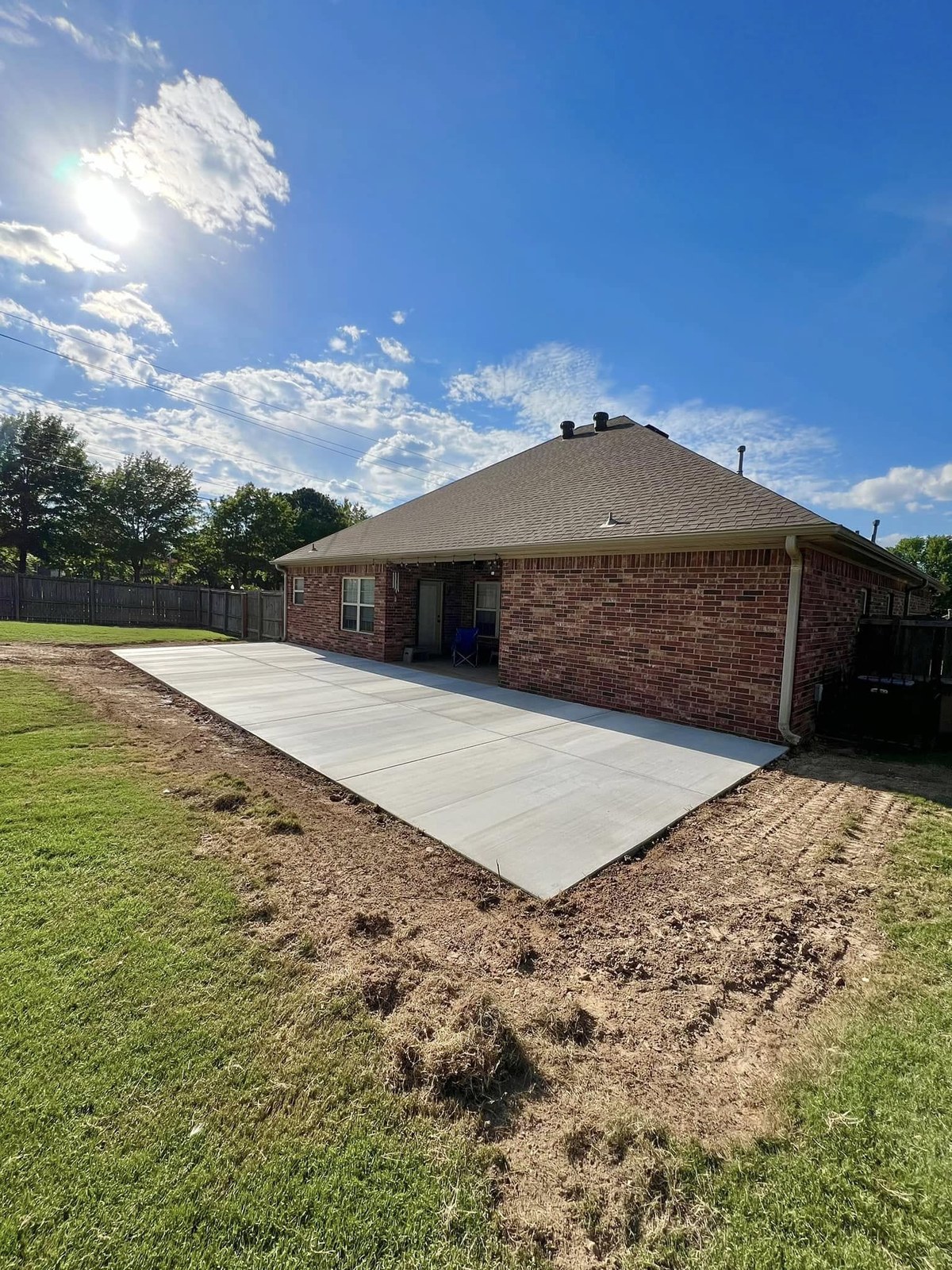
Almost every concrete driveway develops a crack somewhere along the way. If you've spotted one on your own driveway in Bentonville or elsewhere in Northwest Arkansas and started to worry, take a breath first. Most cracking is completely normal and nothing to lose sleep over. Some of it, though, is a sign that something underneath is actually going wrong, and catching that early can save you from a much bigger repair bill later.
At Pristine Concrete, a residential concrete contractor serving Bentonville, Fayetteville, Rogers, Springdale, and Bella Vista, we get calls about driveway cracks all the time, and most of the time we can tell over the phone whether it's a quick fix or something worth a closer look. Here's how to tell the difference yourself.
What Counts as Normal Cracking
Concrete shrinks slightly as it cures, and that shrinkage has to go somewhere. A well-built driveway is poured with control joints, the shallow grooves cut across the surface, specifically so that shrinkage cracking happens along those lines instead of scattering randomly across the slab. If you look closely at a crack and it's running along or very close to one of these joint lines, that's the concrete doing exactly what it was designed to do.
Hairline cracks are also normal, especially in the first year after a new concrete driveway is poured. These are thin, don't have any noticeable depth or width, and don't shift when you drive over them. Arkansas's swing between hot, dry summers and cold winters puts a lot of expansion and contraction stress on a slab, and a bit of surface cracking from that cycle is just part of owning concrete, not a defect.
When Cracking Signals a Bigger Problem
A few warning signs tell a different story. If a crack is wider than about a quarter inch, or if you can see one side of it sitting higher or lower than the other, that's not shrinkage anymore. That kind of movement usually means the ground underneath has shifted or settled unevenly, and the slab is responding to it.
Cracks that keep growing, multiply over a season or two, or run diagonally across the driveway instead of following a joint line are also worth a second look. So is any spot where the edges of a crack are crumbling or flaking away, which is a sign the concrete itself is breaking down rather than just settling.
Pay extra attention to cracking near the garage entrance or along the edge closest to the house. That's often where soil movement shows up first, and it's worth having someone check whether it's cosmetic or connected to drainage or grading issues nearby. Why Concrete Driveways Crack in the First Place A few things tend to drive the difference between a driveway that ages gracefully and one that cracks up early.The ground underneath matters more than most homeowners expect. Northwest Arkansas has a lot of clay-heavy soil, and clay swells when it's wet and shrinks when it dries out. If the base under a driveway wasn't compacted properly before the concrete went down, that soil movement transfers straight into the slab, especially through wet springs and dry summers.
Water is usually the second factor. Poor drainage around a driveway lets water pool and soak into the ground right where the slab needs stable support. Over time, that softens the base and makes settling far more likely, especially combined with a hard freeze that pushes trapped moisture around underground.
Loading the driveway too soon after it's poured is another common one. Concrete needs time to reach real strength, and parking a car or backing in a loaded truck too early can stress a slab before it's ready.
And finally, thickness and reinforcement matter. A driveway that's going to handle daily vehicle traffic needs to be poured thick enough and reinforced properly. Skipping that to save money upfront tends to catch up with a driveway within just a few years.
How Pristine Concrete Approaches It
Pristine Concrete handles the prep work most homeowners never see: checking the soil, planning drainage, and getting the base right before a single yard of concrete gets poured. Clients consistently mention their love of project updates, including when weather pushes a schedule around, and that same communication carries into how we handle driveway repairs and replacements too.
If you're not sure whether the cracking on your driveway is normal wear or something more, we offer free, no-obligation on-site consultations. We'll take a look, tell you honestly what we're seeing, and walk you through your options, whether that's leaving it alone, a patch repair, or a full driveway replacement. You can also see examples of our finished driveway work to get a feel for the kind of finish quality we aim for on every job.
We work with homeowners throughout the Fayetteville-to-Bella Vista corridor, including Bentonville, Rogers, Springdale, Lowell, and the surrounding Northwest Arkansas area. Ready to Have Your Driveway Checked? If your concrete driveway has some cracking and you're not sure whether it's normal or a warning sign, give Saul a call at (479) 409-2504 or set up your free consultation online. We'll take an honest look and let you know exactly where things stand, no pressure and no obligation.